
Period Underwear Is FSA Eligible — Here's How to Use It

Yes, period underwear qualifies as an FSA-eligible menstrual care product. You can pay with your FSA or HSA debit card at checkout or pay out of pocket and submit the receipt for reimbursement. The CARES Act made menstrual care products qualified medical expenses retroactive to January 1, 2020, so this isn’t a gray area — it’s federal law.
Your immediate next step is simple: if your FSA/HSA debit card is accepted at the merchant, use it. If not, pay with any card and file a reimbursement claim with your plan administrator using the receipt.
- Period underwear is explicitly covered as a menstrual care product under the CARES Act.
- Pay at checkout with your FSA/HSA card, or save your receipt and file for reimbursement.
- Your plan administrator controls the proof requirements — a clear item description on the receipt matters.
- HSA funds roll over year to year; FSA funds often have a use-it-or-lose-it deadline, so timing your purchase matters.
Pro Tip: Make sure the item description on your receipt or order confirmation says “period underwear” or “menstrual underwear” — not just a style name or SKU. That one detail is what administrators look for when approving a claim.
Using pre-tax FSA or HSA dollars to buy period underwear effectively reduces your out-of-pocket cost, since you’re spending money that was never taxed as income.
Key Takeaways
Period underwear is a federally recognized menstrual care product eligible for FSA, HSA, and HRA reimbursement under the CARES Act, effective for expenses after December 31, 2019.
| Point | Details |
|---|---|
| FSA/HSA eligibility confirmed | The CARES Act explicitly added menstrual care products, including period underwear, to qualified medical expenses. |
| Two payment paths | Use your FSA/HSA debit card at checkout, or pay out of pocket and file a reimbursement claim with your receipt. |
| Receipt description matters | The item description must say “period underwear” or “menstrual underwear” — a generic label can trigger a denial. |
| Appeal denials with documentation | A product page screenshot plus a one-sentence explanation resolves most denials without a lengthy phone call. |
| Sweeteebeauty’s collection | Sweeteebeauty labels all period underwear as menstrual products, making FSA/HSA reimbursement straightforward from the order confirmation. |
Table of Contents
- Which menstrual products qualify for FSA, HSA, and HRA?
- How to pay with FSA or HSA funds at checkout and get reimbursed
- What receipts and documentation your administrator will want
- What to do if your FSA card is declined or a claim is denied
- Where to shop for FSA-eligible period underwear
- Sweeteebeauty’s period underwear and how to use FSA funds there
- Sources
Which menstrual products qualify for FSA, HSA, and HRA?
The CARES Act removed the prescription requirement for many over-the-counter items and added menstrual care products to the list of qualified medical expenses. Federal benefits administration guidance confirmed this directly, stating that menstrual care products may be reimbursed through HSA, FSA, or HRA funds and pointing administrators to IRS Publication 969 for details.
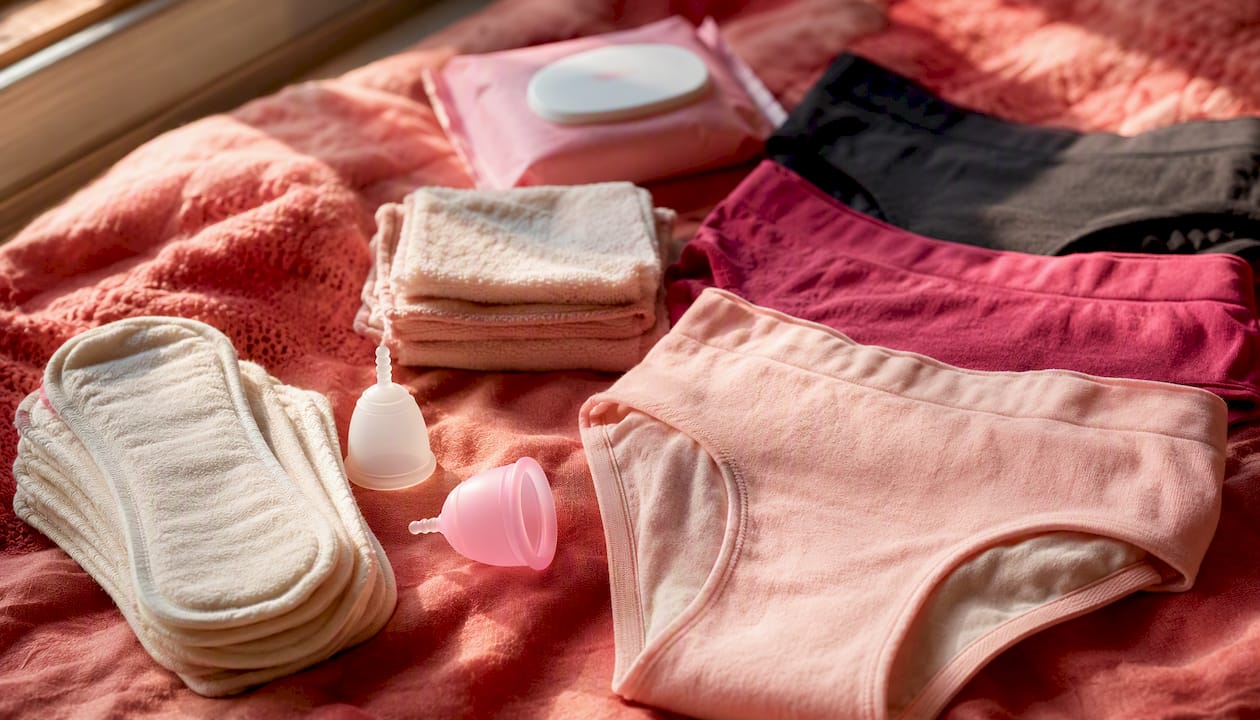
The statutory definition covers a broad range of products. Tampons, pads, liners, menstrual cups, menstrual sponges, and both disposable and non-disposable absorbent underwear all qualify. Period underwear falls squarely into the non-disposable absorbent underwear category — it’s not a workaround or a stretch of the definition.
The edge case worth knowing: IRS section 213(a) guidance draws a line between medical care expenses and personal clothing. An administrator could question an item if the product description reads like general apparel rather than a menstrual product. Period underwear sold and labeled specifically for menstrual use passes this test. A pair of athletic shorts with an absorbent liner marketed as activewear probably doesn’t. When in doubt, the product page’s own language is your best evidence.
How to pay with FSA or HSA funds at checkout and get reimbursed
Two paths get you to the same result. The faster one is using your FSA or HSA debit card directly at checkout. The backup is paying with any card and filing a reimbursement claim afterward.
Using your FSA/HSA card at checkout
- Add period underwear to your cart on a merchant that accepts FSA/HSA payment.
- At checkout, select your FSA or HSA debit card as the payment method.
- The card will process like a standard debit card. If the merchant uses an Inventory Information Approval System (IIAS), eligible items are flagged automatically and the card clears without extra steps.
- Save the order confirmation email. It serves as your receipt if your administrator ever audits the purchase.
- If the card declines, don’t abandon the cart — pay with another method and use the reimbursement path below.
Filing for reimbursement after paying out of pocket
- Complete your purchase and save the receipt or order confirmation.
- Log in to your FSA or HSA administrator’s portal (or call the number on the back of your benefits card).
- Submit a reimbursement claim. You’ll upload or fax the receipt and, in some cases, fill out a short claim form.
- Most administrators process claims within 5–10 business days, though timelines vary by plan.
- Reimbursement is deposited to your linked bank account or mailed as a check, depending on your plan setup.
Pro Tip: When placing an online order, check whether the confirmation email includes the full item name. If it only shows a SKU or a style code, print the product page alongside the confirmation. That combination gives your administrator everything they need.
Merchants that use IIAS automatically separate FSA-eligible items from non-eligible ones at checkout, which means your card won’t be charged for anything that doesn’t qualify. Not every retailer has IIAS, so if you’re shopping somewhere new, look for an “FSA/HSA eligible” badge on the product page before you assume the card will work.
What receipts and documentation your administrator will want
Administrators aren’t trying to make this hard — they just need enough information to confirm the purchase matches an eligible category. A receipt that clearly shows what you bought, when, and how much you paid is usually all it takes.
| Receipt Field | What to Look For |
|---|---|
| Merchant name | Full store or website name |
| Date of purchase | Must fall within your plan year |
| Item description | Should say “period underwear” or “menstrual underwear” — not just a style name |
| Price and quantity | Per-item price and total |
| Proof of payment | Last four digits of card used, or “paid” confirmation |
Beyond the receipt itself, a few supporting documents can make a claim bulletproof. An order confirmation email, a packing slip, or a screenshot of the product page showing the item is described as a menstrual product all work. If your administrator asks for more, a one-sentence letter stating that the item is a non-disposable menstrual care product purchased for personal menstrual management is usually enough to close the case.
Administrators match the item description on your receipt against their list of allowed categories. “Period underwear” and “menstrual underwear” are recognized terms. A generic description like “women’s brief” or “underwear” may trigger a manual review or an outright denial — which is why the product page screenshot is worth keeping.
What to do if your FSA card is declined or a claim is denied
A decline at checkout doesn’t mean the product isn’t eligible. It often means the merchant doesn’t have IIAS, your card balance is lower than the purchase total, or there’s a temporary hold on the account.
If your card is declined at checkout:
- Pay with a different card immediately so you don’t lose the order.
- Check your FSA/HSA balance through your administrator’s app or portal.
- Confirm the merchant accepts FSA/HSA cards — some don’t, regardless of product eligibility.
- Contact your plan administrator to rule out a card issue before your next attempt.
If a reimbursement claim is denied:
- Read the denial reason carefully. Administrators are required to tell you why.
- If the denial says “item not eligible,” gather your product page screenshot and confirm the description says “menstrual product” or “period underwear.”
- Resubmit with the additional documentation. A short, well-documented appeal with an order confirmation, product page screenshot, and a one-sentence explanation that the item is a menstrual care product frequently resolves denials faster than a phone call.
- If the denial stands, ask for the formal appeals process in writing. Most plans have a 30–60 day window to appeal.
- If you believe the denial is incorrect, you can reference the FSAFEDS benefits administration guidance confirming menstrual care product eligibility.
Documents to have ready before you call your administrator:
- Original receipt or order confirmation
- Product page screenshot with item description visible
- Your FSA/HSA plan number and the claim reference number
- The denial letter or denial code
Where to shop for FSA-eligible period underwear
The easiest path to a smooth FSA transaction is choosing a merchant that clearly labels period underwear as a menstrual care product. Three types of merchants make this straightforward.
FSA/HSA specialty storefronts like FSAstore.com and HSAstore.com list period underwear as eligible and accept FSA/HSA debit cards directly. FSAstore confirms that period panties are HSA/FSA-eligible and recommends saving receipts as proof of qualified purchase.
Major retailers with IIAS — large pharmacy chains and some big-box stores — use the Inventory Information Approval System to automatically flag eligible items at checkout. Your FSA card clears without any extra steps on your end.
Direct-to-consumer brands that label their products as menstrual underwear on product pages and order confirmations also work well for reimbursement claims, even if they don’t have IIAS. The key is that the product description on the receipt matches what your administrator expects to see.
- Look for “FSA/HSA eligible” badges on product pages before adding to cart.
- Check checkout messaging — some merchants display “HSA/FSA cards accepted” near the payment fields.
- Save a screenshot of the product page at the time of purchase, not just the receipt.
- If you’re spending FSA funds near your plan’s year-end deadline, FSA year-end spending guidance recommends stocking up on eligible items rather than letting funds lapse.
Pro Tip: FSA/HSA specialty storefronts are the lowest-friction option when you need immediate card acceptance. For brands you already trust, a product page screenshot plus the order confirmation gives you everything you need for a clean reimbursement claim.
Sweeteebeauty’s period underwear and how to use FSA funds there
Sweeteebeauty’s period underwear is designed and sold specifically as a menstrual care product, which means the product descriptions and order confirmations carry the language administrators need to approve a claim.
The full period underwear collection covers multiple absorbency levels and styles:
- Light to moderate flow: Seamless bikini and lace hiphugger styles for everyday wear and lighter days.
- Heavy flow: The heavy flow collection includes styles built for maximum absorbency without bulk.
- Teen styles: The teen brief and teen bikini options are sized and designed for younger users, with the same multilayer leak-proof construction.
- Bundles: The HipHugger bundle is a practical choice for FSA year-end spending — buying multiple pairs in one order means one receipt, one claim, and more value from pre-tax dollars.
Every Sweeteebeauty order confirmation includes the product name as “period underwear,” which is exactly what administrators look for. If you need a product page screenshot for your records, the item descriptions on each page use menstrual product language throughout.
Pro Tip: If your FSA deadline is approaching, a bundle order is the most efficient way to spend remaining funds. One transaction, one receipt, and you’re covered for multiple cycles.
Why clear labeling matters more than most brands realize
Accessibility to menstrual care shouldn’t stop at the product itself. If the receipt says “women’s brief” instead of “period underwear,” a real person has to spend time on hold with their benefits administrator to fix a paperwork problem that never needed to exist. Sweeteebeauty prioritizes product descriptions that work for FSA and HSA users from the first line of the order confirmation — because the point of a reusable menstrual product is to make your life easier, not to create a new administrative task.
Sweeteebeauty makes FSA spending on period underwear straightforward
Reusable period underwear is one of the smarter ways to spend FSA dollars. You get a product that lasts through hundreds of washes, reduces waste, and costs less per cycle than disposables over time — and you’re paying with pre-tax money.
Sweeteebeauty’s period underwear collection is labeled as menstrual underwear throughout, so your order confirmation is ready to submit to your administrator without extra steps. Use your FSA or HSA debit card at checkout, or pay with any card and file for reimbursement using the confirmation email. If your administrator needs clarification on a receipt, Sweeteebeauty’s customer service team can provide a detailed product description letter on request. Browse the collection and place your order before your FSA deadline to make the most of your pre-tax funds.
Sources
- Benefits Administration Letter - Update on Qualified Medical Expenses and Dependent Care FSA (FSAFEDS)
- IRS private letter ruling and section 213 guidance
- What Are Period Panties? | FSAstore
This article is general information, not a substitute for advice from a qualified financial advisor. Consult a qualified financial professional about your own circumstances before acting on anything here.

