
Period Underwear Care: Wash, Stain Fix, and Dry Right

Rinse in cold water immediately after each wear, wash on a cold/delicate cycle, and air-dry. That three-step routine is the foundation of good period underwear care, and it keeps your pairs hygienic, absorbent, and working for years. Laundry-care experts confirm that cold rinsing until the water runs clear prevents blood proteins from bonding to fabric, which is the single biggest mistake people make when washing period panties.
The short version of what you need to do every time:
- Pre-rinse in cold water until the water runs mostly clear.
- Wash on cold/delicate (machine or hand), using a fragrance-free, enzyme-free detergent.
- Air-dry completely before storing.
WebMD’s overview recommends changing period underwear regularly throughout the day and washing after every single wear. That frequency isn’t optional if you care about hygiene.
Pro Tip: *Pre-rinse in the shower right before you change. You’re already there, the water’s cold, and you save yourself a soaking step later.
Key Takeaways
Proper period underwear care comes down to three non-negotiable steps: cold rinse immediately, gentle wash, and air-dry completely before storing.
| Point | Details |
|---|---|
| Cold rinse first | Rinse in cold water until mostly clear right after each wear to prevent stains from setting. |
| Wash on cold/delicate | Use a fragrance-free, enzyme-free detergent; machine wash in a mesh bag or hand-wash gently. |
| Air-dry only | Skip the dryer; heat cracks the waterproof membrane and degrades elastic over time. |
| Avoid softener and bleach | Both destroy absorbency and the leak-proof barrier; never use them on period underwear. |
| Sweeteebeauty’s recommendation | Every pair includes care instructions; follow them for model-specific guidance on wash and dry. |
Table of Contents
- 1. How to clean period underwear step by step
- 2. How to remove blood stains and deodorize
- 3. Drying, storing, and knowing when to replace your pairs
- 4. How different fabrics affect your care routine
- 5. What clinicians and regulators say about period underwear safety
- Why the care routine matters more than most people realize
- Sweeteebeauty makes caring for period underwear straightforward
- Sources
1. How to clean period underwear step by step
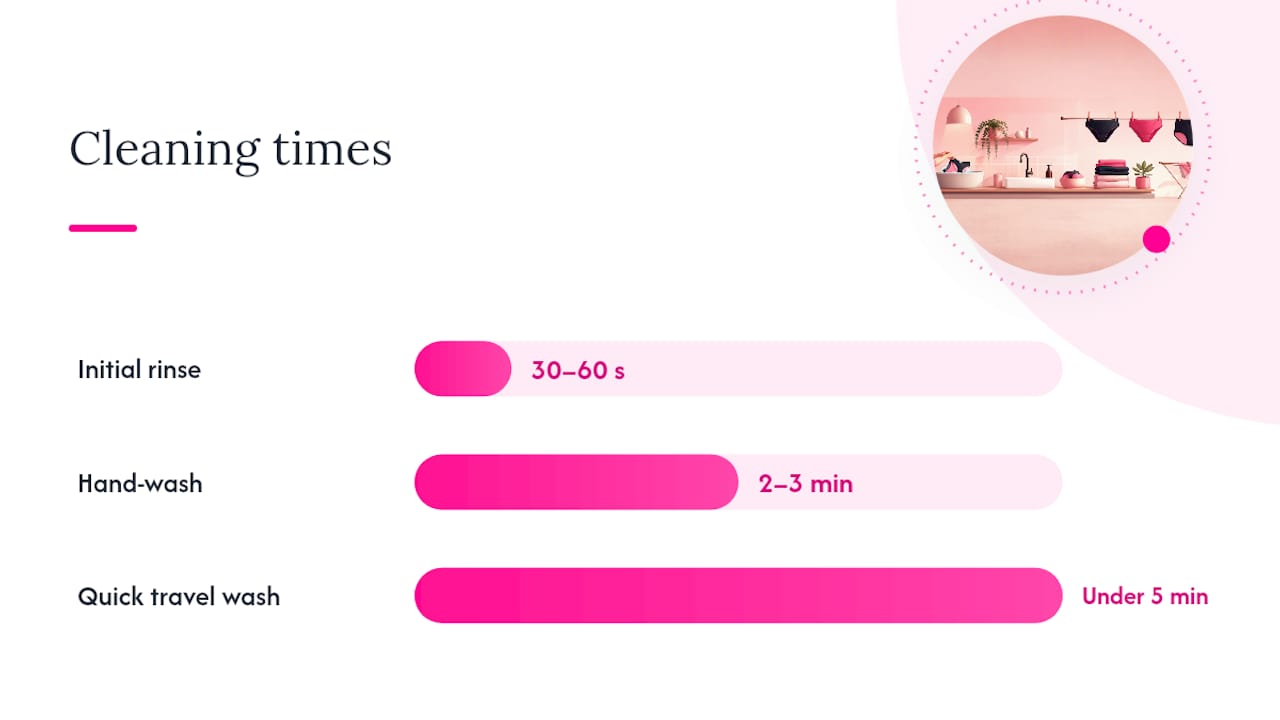
Start at the point of change, not at the laundry machine. The moment you take off your period underwear, hold the gusset under cold running water and squeeze gently until the water runs mostly clear. This takes 30–60 seconds and does most of the heavy lifting. If you can’t wash right away, drop them into a wet bag or a small container of cold water. Never leave them balled up in a hamper while still wet.
Hand-washing method:
- Fill a sink or basin with cool water (not warm, not hot).
- Add a small amount of fragrance-free, enzyme-free liquid detergent, about a teaspoon.
- Submerge the underwear and gently work the gusset between your fingers for 2–3 minutes.
- Rinse thoroughly until no soap remains.
Machine-washing method:
- Place the underwear inside a mesh laundry bag to protect the layers from agitation.
- Select cold water and a gentle or delicate cycle.
- Wash with similar lightweight items, not heavy denim or towels.
- Skip the fabric softener entirely. Softener coats absorbent fibers and kills the gusset’s ability to wick moisture.
Bleach is also off the table. It degrades the waterproof membrane and weakens elastic over time. Fragrance-free, dye-free detergents like Seventh Generation Free & Clear or All Free Clear are solid choices that won’t irritate sensitive skin or compromise the fabric.
Washing before the first wear matters too. A fresh-from-the-package rinse opens absorbent fibers so the underwear performs as intended from day one.
Pro Tip: If you’re traveling, a small travel-size bottle of fragrance-free detergent and a sink is all you need. Hand-washing period underwear takes under five minutes and they’re dry by morning if you hang them.
2. How to remove blood stains and deodorize
Cold water is the reason blood stains come out at all. Blood is a protein-based stain, and heat sets proteins permanently into fabric. Hot water essentially cooks the stain in. So the entire stain-removal process stays cold from start to finish.
Step-by-step stain removal:
- Cold rinse immediately, as described above.
- Apply a small amount of enzyme-free liquid detergent directly to the stained area and let it sit for 5–10 minutes.
- For whites or light-colored styles, an oxygen-based color-safe bleach (like OxiClean Free) can help lift residual staining. Apply it to the gusset only, not the full garment.
- Rinse thoroughly in cold water and wash as normal.
Avoid soaking overnight. A short soak of 15–30 minutes in cold water with a little detergent is fine, but extended soaking can weaken elastic and the waterproof backing.
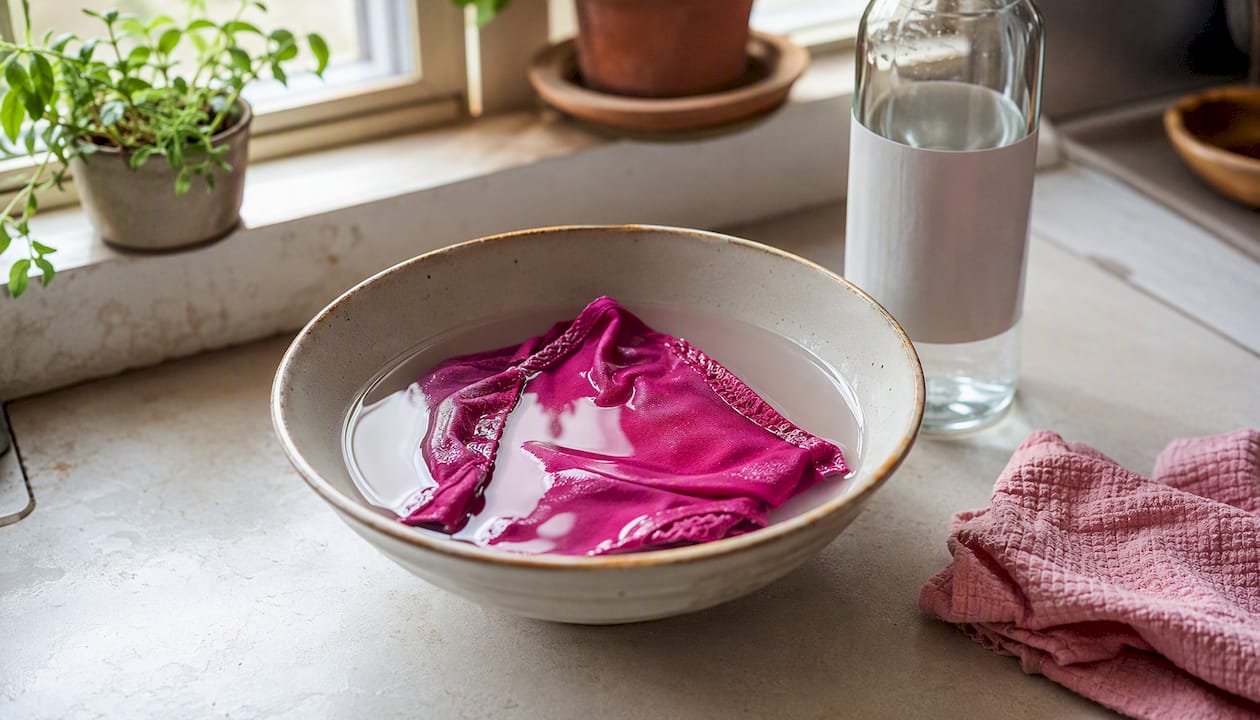
For persistent odor after washing, a 15-minute soak in a solution of one part white vinegar to four parts cold water can help neutralize bacteria. Rinse well afterward. Sunlight has mild sanitizing properties, but prolonged direct sun exposure fades fabric and can degrade synthetic fibers, so limit it to an hour or two at most.
Enzyme cleaners (like Biz or Puracy) work well on protein stains but should be patch-tested on an inconspicuous area first, since some formulas can affect the waterproof layer. A deep clean is worth doing after illness, after the underwear has been in storage for a season, or when a pair develops an odor that a normal wash doesn’t clear.
Don’t let it sit more than a minute, and always rinse cold.*
3. Drying, storing, and knowing when to replace your pairs
Drying
Air-drying is the right call for period underwear. Lay them flat or hang them in a well-ventilated spot away from direct heat sources. High heat damages two things that matter most: the elastic waistband and the laminated waterproof barrier (usually a PUL or PVDF membrane). Once that barrier cracks or delaminates, the underwear leaks.
If your care label explicitly allows tumble drying, use the lowest heat setting only. Many brands do not recommend it at all. When in doubt, air-dry.
Avoid draping them directly over a radiator or leaving them in a hot car. Even indirect heat over time degrades the functional layers.
Storing
Store only when fully dry. Damp period underwear stored in a drawer or airtight bag breeds bacteria and mildew fast. For travel or gym bags, use a breathable wet bag designed for this purpose. Avoid sealed plastic bags for anything longer than a few hours.
Repairs and replacement
Small seam separations can be hand-stitched with a needle and thread. Stretched-out elastic at the leg opening can sometimes be replaced by a tailor. But some signs mean it’s time to retire a pair:
- The gusset no longer absorbs quickly (liquid pools on the surface).
- You notice leaking through the outer layer.
- A persistent odor remains after a proper wash and deep clean.
- The waterproof layer feels stiff, cracked, or tacky.
How long a pair lasts depends on how often you wear and wash it. With proper care, most period underwear holds up for several years of regular use.
4. How different fabrics affect your care routine
Period underwear isn’t a single material. Most pairs use a layered construction: a wicking top layer that pulls moisture away from skin, an absorbent middle layer that holds fluid, and a leak-proof barrier at the bottom. Each layer has different tolerances, and caring for the whole garment means respecting all three.
Bamboo and modal: Soft and naturally moisture-wicking, but they shrink and pill with heat. Always cold wash, always air-dry. These fibers are more delicate than cotton and don’t respond well to aggressive wringing.
Cotton blends: More forgiving than bamboo or modal, but still cold-wash only. Cotton can handle a bit more agitation, which makes it a reasonable candidate for machine washing in a mesh bag.
Synthetic wicking fabrics (nylon, polyester, spandex blends): These dry fast and handle machine washing well, but they hold odor more than natural fibers. A vinegar rinse occasionally helps. Fabric softener is especially damaging to synthetics because it clogs the wicking channels.
PUL/PVDF waterproof membranes: The leak-proof barrier is the most heat-sensitive part of the garment. Hot water, high dryer heat, and bleach all degrade it. Once the membrane is compromised, no amount of washing fixes it.
Heavier-absorbency gussets need more thorough rinsing because they hold more fluid. Give them an extra minute under cold water during the pre-rinse step. For breathable apparel that pairs well with your period underwear routine, the same gentle-wash principles apply to delicate fabrics like lace and lightweight knits.
Quick reference by material:
- Bamboo/modal: Cold wash, no wringing, lay flat to dry.
- Cotton blend: Cold wash, mesh bag, hang or lay flat to dry.
- Synthetic blend: Cold wash, mesh bag, air-dry; occasional vinegar rinse for odor.
- Any style with PUL/PVDF barrier: No heat, no bleach, no softener, ever.
5. What clinicians and regulators say about period underwear safety
Clinicians advise treating period underwear with the same hygiene standards as other intimate apparel: wash after every wear, change regularly, and watch for signs of irritation or infection. That standard isn’t stricter than what you’d apply to any underwear worn close to the body during menstruation.
The more pressing safety question in recent years has been PFAS (per- and polyfluoroalkyl substances). Testing and public health guidance have identified PFAS in the layers of certain period underwear products. PFAS are a class of synthetic chemicals used in water-resistant coatings, and some have been linked to health concerns at elevated exposure levels.
The FDA and the EPA both publish guidance on PFAS health effects and consumer product safety. The EPA’s PFAS resources in particular provide context on long-term exposure risks that’s worth reading if you want the full picture.
Practically, here’s what you can do:
- Look for products labeled “PFAS-free” and check whether the manufacturer publishes third-party testing results.
- Wash new period underwear before the first wear to remove any surface residues.
- If you notice persistent skin irritation, discontinue use and consult a clinician.
- Check manufacturer statements and care pages for material disclosures.
Pro Tip: “PFAS-free” on a label is only as reliable as the brand’s transparency. Look for brands that publish third-party lab testing, not just marketing copy.
Why the care routine matters more than most people realize
Most people treat period underwear like regular underwear and wonder why it stops working after six months. The difference is the layered construction. You’re not washing a single piece of fabric. You’re washing a wicking layer, an absorbent core, and a waterproof membrane bonded together, and each one has a different enemy: heat for the membrane, softener for the absorbent core, enzymes for the wicking layer.
The cold-rinse-first rule isn’t just about stain removal. It’s about not forcing the absorbent layer to hold dried blood through a full wash cycle. A pair that gets rinsed immediately after wear lasts noticeably longer than one that sits in a hamper until laundry day.
There’s also a tendency to over-treat period underwear when it smells or stains. More detergent, hotter water, longer soaks. That instinct is wrong. The garment needs less intervention, not more. A short cold rinse, a gentle wash, and patience while it air-dries will outperform aggressive cleaning every time.
The PFAS question is worth taking seriously, but it shouldn’t cause panic. The practical response is simple: choose brands that are transparent about materials, wash before first use, and change regularly. That’s it.
Sweeteebeauty makes caring for period underwear straightforward
Sweeteebeauty’s leak-proof period underwear is built with a multilayer gusset designed to survive proper care routines without losing absorbency or structure. The fabrics are selected for cold-wash durability, and every pair ships with care instructions so you know exactly what the label means for that specific style.
For heavier days, the heavy-flow collection uses a thicker absorbent core that still rinses clean quickly. Teens and first-time users will find the teen brief easy to care for and comfortable to wear. If you want to build a rotation without guessing which styles work together, the variety bundle covers multiple absorbency levels in one order.
Browse the full collection at Sweeteebeauty and find the styles that fit your flow, your body, and your routine.
Sources
The following resources are worth bookmarking for clinical, chemical, and laundry-care details:
Always check the care label on your specific pair first. For medical concerns, including persistent irritation or infection symptoms, consult a clinician rather than relying on general guidance.
This article is general information, not a substitute for advice from a qualified doctor. Consult a qualified healthcare professional about your own circumstances before acting on anything here.
Recommended
- How to Wash Period Underwear & Make It Last | SweeTee Beauty | SweeTee Beauty
- How Period Underwear Works | The SweeTee Journal | SweeTee Beauty
- Period Underwear vs. Pads: Which Is Better? | SweeTee Beauty | SweeTee Beauty
- Best Period Underwear for Teens: A Parent’s Guide | SweeTee Beauty | SweeTee Beauty


